How I Found My Balance — Simple Moves That Actually Work
Balance isn’t just for athletes — it’s part of everyday life. I used to wobble stepping off curbs or feel unsteady carrying groceries. After a minor fall, I realized something had to change. Turns out, balance is a skill you can train, not just a trait you’re born with. This is my journey into body awareness and stability, from shaky beginnings to standing strong — no fancy gear, just real, doable steps. What began as a personal concern turned into a deeper understanding of how our bodies stay upright, how modern habits quietly erode this ability, and how simple, consistent actions can rebuild it. This isn’t about mastering yoga poses or balancing on a beam — it’s about feeling steady on your feet, confident in your movements, and secure in your daily life.
The Moment I Knew My Balance Was Off
It happened on an ordinary Tuesday. I was walking down the sidewalk, coffee in hand, when I stepped off the curb a little too quickly. Instead of landing smoothly, my foot wobbled, my ankle rolled slightly, and I had to grab a lamppost to keep from falling. It wasn’t a serious incident — no injuries, no hospital visit — but it left me shaken. Not physically, but mentally. I remember standing there, heart racing, thinking, This shouldn’t have happened. I wasn’t tired, I wasn’t distracted, and yet my body betrayed me in a moment that should have been effortless.
That small stumble was a wake-up call. I started paying attention to other moments of instability: leaning against the kitchen counter while chopping vegetables, swaying slightly when drying my hair, or tripping over the edge of a rug. These weren’t dramatic falls, but they were signs — subtle warnings that my balance was deteriorating. Like many people, I had assumed that balance was something you either had or didn’t, like flexibility or coordination. I didn’t realize it was a dynamic system that could weaken over time, especially as we age.
Medical research confirms that balance begins to decline as early as our 40s, and the rate of decline accelerates after 60. This isn’t just about getting older — it’s about how we live. Sedentary routines, lack of varied movement, and even the types of shoes we wear contribute to a gradual loss of stability. The body adapts to what it’s asked to do. If it’s rarely challenged to stay balanced, that ability fades. And the consequences can be serious: according to the Centers for Disease Control and Prevention, falls are a leading cause of injury among adults over 50, often resulting in fractures, hospitalizations, and a loss of independence.
What Balance Really Means (And Why It’s Not Just About Standing on One Leg)
When most people think of balance, they picture someone standing on one foot, maybe with arms outstretched. But true balance is far more complex — it’s a continuous, invisible conversation between your body and your environment. It involves three major systems working together: your inner ear (vestibular system), your eyes (visual system), and your body’s sense of position (proprioception). These systems send constant signals to your brain, which processes the information and makes micro-adjustments to keep you upright — often without you even noticing.
The inner ear contains fluid-filled canals that detect motion and head position. When you move your head, the fluid shifts, signaling whether you’re tilting, turning, or staying still. Your eyes provide visual cues about your surroundings — is the ground level? Are you moving or is the world moving? Proprioception, sometimes called the “sixth sense,” refers to your body’s ability to sense where your limbs are in space. Nerve endings in your muscles, tendons, and joints send feedback about pressure, stretch, and position. Close your eyes and touch your nose with your finger — that’s proprioception at work.
When all three systems are functioning well, balance feels automatic. But if one system is impaired — say, your vision in low light, or your proprioception due to stiff joints — the others must compensate. Over time, if the brain isn’t getting reliable input, your stability suffers. This is why older adults may feel unsteady in dim lighting or on uneven terrain — their systems aren’t communicating as effectively. The good news is that each of these systems can be trained. Just like building muscle, improving balance is about giving your body the right kind of practice.
Why Modern Life Is Wrecking Our Stability
Ironically, while we live in an age of fitness trackers, workout apps, and gym memberships, many of us are less balanced than ever. The problem isn’t a lack of physical activity — it’s the type of activity we engage in. Modern life is built on predictability: flat floors, smooth sidewalks, cushioned shoes, and chairs that do the work of keeping us upright. While these conveniences are comfortable, they deprive our bodies of the varied sensory input needed to maintain balance.
Think about your daily movements. You likely walk on even surfaces, wear supportive shoes with thick soles, and spend hours sitting — whether at a desk, in a car, or on a couch. This routine dulls your proprioception. Your feet, which are packed with nerve endings, are enclosed in rigid shoes and rarely feel the ground. Your ankles don’t have to adjust to slopes or textures. Your core muscles, essential for stability, remain inactive when you’re seated. Over time, your body forgets how to respond to small shifts in weight or uneven terrain.
Even regular exercise can fall short. Running on a treadmill, cycling on a stationary bike, or lifting weights in a gym — all valuable activities — don’t necessarily challenge your balance. They strengthen muscles and improve cardiovascular health, but they don’t train your body to respond to real-world instability. The result is a paradox: we’re more physically active than previous generations, yet more prone to stumbling, tripping, or falling in everyday situations. The body adapts to its environment — and if that environment is too controlled, your balance skills weaken.
My First Try: What I Actually Did (And What Felt Totally Weird)
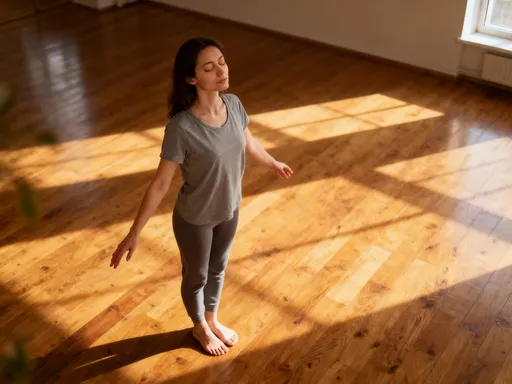
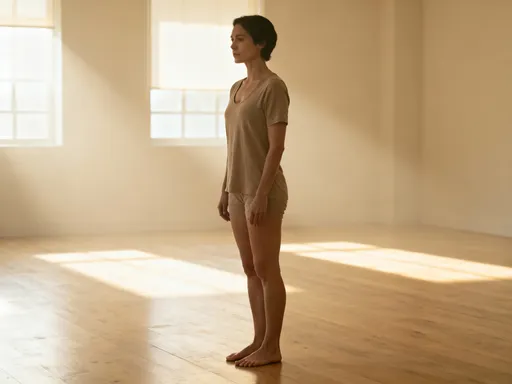
After my fall, I decided to start small. I looked up basic balance exercises and tried them in my living room. The first thing I attempted was simply standing with my feet together, arms at my sides. Easy, right? But when I closed my eyes, I immediately began to sway. Within seconds, I had to open them to avoid tipping over. I was surprised — I hadn’t realized how much I relied on my vision to stay upright.
Next, I tried standing on one leg. I lifted my right foot, bent at the knee, and held it behind me. At first, I could only manage a few seconds before wobbling uncontrollably. My ankle trembled, my hips shifted, and I felt a strange sense of disorientation. It wasn’t painful, but it was humbling. I had expected to be better at this — after all, I walked every day, climbed stairs, carried laundry. But standing still on one leg turned out to be a completely different skill.
What surprised me most was how much I had to focus. I had to think about where my weight was — was it on the ball of my foot? My heel? Was I leaning forward? I noticed subtle shifts I’d never paid attention to before. My body was sending signals, but I hadn’t been listening. Over time, I began to recognize patterns: I was stronger on my left leg, I tended to lock my knees, and I held tension in my shoulders without realizing it. These small observations became the foundation of my progress. Balance wasn’t just about strength — it was about awareness.
The 3 Daily Habits That Made the Real Difference
Instead of overwhelming myself with complex routines, I focused on three simple habits I could do every day. They took less than ten minutes total, but over weeks, they made a noticeable difference. The key wasn’t intensity — it was consistency. Balance improves through repetition, not exertion.
Habit 1: 5-minute morning balance drills. Every morning, after brushing my teeth, I spent five minutes doing basic balance exercises. I started with the heel-to-toe walk — placing one foot directly in front of the other, like walking on a tightrope. I did this slowly, across the length of my hallway, focusing on keeping my gaze forward and my core engaged. Then, I practiced weight shifts: standing with feet hip-width apart and slowly shifting my weight from left to right, front to back. These movements trained my body to adjust to small changes in center of gravity. I also returned to single-leg stands, increasing my time gradually. At first, I used the counter for support. Over time, I needed it less.
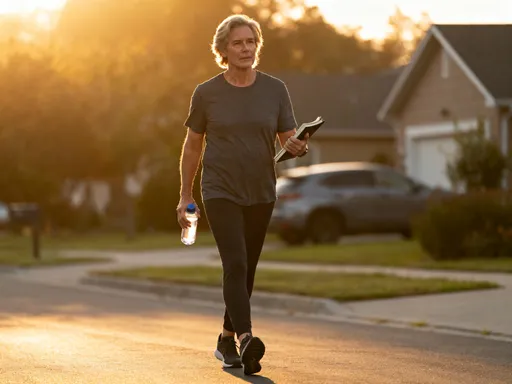
Habit 2: Walking with awareness. I began paying attention to how I walked. Instead of rushing, I took slower, more deliberate steps. I noticed the sensation of my heel striking the ground, rolling through the foot, and pushing off with the toes. I kept my posture tall, shoulders relaxed, and arms swinging naturally. This mindful walking wasn’t just about balance — it helped me feel more grounded and present. I started doing it during short walks to the mailbox, around the block, or even in grocery store aisles. The more I practiced, the more natural it felt.
Habit 3: Strengthening ankles and core without equipment. I realized that balance isn’t just about standing still — it’s about having the strength to respond when you’re off-center. I incorporated simple strength exercises: ankle circles, toe raises, and seated leg lifts to improve ankle mobility and stability. For the core, I did gentle pelvic tilts, abdominal bracing (tightening the lower abs as if pulling the navel toward the spine), and seated marches — lifting one knee at a time while sitting upright. These required no equipment, could be done at home, and directly supported better balance. Research shows that even modest improvements in ankle strength and core control can reduce fall risk and enhance stability.
What made these habits stick was their simplicity. I didn’t need a gym, special clothes, or extra time. They fit into my routine without disruption. And because I did them daily, my body adapted. The tremors in my ankle faded. My posture improved. I stopped holding my breath when I stood on one leg. Progress wasn’t dramatic — it was gradual, but undeniable.
Small Wins, Big Changes: What Improved Beyond Stability
The benefits of improving my balance went far beyond not wobbling on curbs. One of the first changes I noticed was in my posture. I used to slouch when sitting, especially after long days at the computer. But as my core strength and body awareness improved, I found myself sitting taller without effort. My lower back tension, which I had accepted as normal, began to ease. I realized that poor posture wasn’t just a comfort issue — it was a balance issue. When your body is misaligned, your center of gravity shifts, forcing your muscles to work harder to keep you upright.
I also felt more confident in my movements. I no longer hesitated before stepping off a curb or walking down a sloped driveway. I carried heavy bags without fear of losing my footing. Even simple tasks like bending to tie my shoes or reaching for a high shelf felt safer. This confidence wasn’t just physical — it had an emotional impact. I felt more capable, more in control of my body. That sense of security spilled over into other areas of life. I walked with purpose. I stood with presence.
Perhaps the most unexpected benefit was a greater body-mind connection. So much of modern life pulls us out of our bodies — screens, schedules, stress. But balance training brought me back. I became more attuned to how I felt in each moment: the pressure of my feet on the floor, the alignment of my spine, the rhythm of my breath. This mindfulness wasn’t forced — it emerged naturally from paying attention to movement. I began to feel more “present” in my body, more connected to the physical experience of being alive. It wasn’t about achieving perfection — it was about noticing, adjusting, and showing up for myself in small, meaningful ways.
How to Start Safely and Build Confidence (Even If You’re Nervous)
If you’re new to balance training, or if you’ve had a fall before, it’s natural to feel cautious. The good news is that balance exercises can be adapted to any fitness level and done safely at home. The key is to start where you are and progress at your own pace. You don’t need to stand on one leg for a minute on day one — you just need to begin.
Use support wisely. A sturdy chair, kitchen counter, or wall can provide stability as you practice. Place your hand lightly on the surface — just enough to steady yourself if you wobble. Over time, you’ll find you need less support. Always wear flat, flexible shoes or go barefoot on a non-slip surface to allow your feet to feel the ground. Avoid slippery floors or cluttered spaces where you might trip.
Pay attention to signs of progress. You’re improving if you can stand longer on one leg, wobble less during weight shifts, or walk with smoother, more confident steps. You might notice that you catch yourself more quickly when you stumble, or that you feel more stable on uneven ground. These are real gains. If you experience pain, dizziness, or persistent imbalance, it’s important to consult a healthcare professional. Physical therapists, in particular, are trained in balance rehabilitation and can provide personalized guidance.
Remember, this isn’t about perfection. It’s about practice. Some days will feel easier than others — that’s normal. The goal isn’t to master every exercise, but to build awareness and resilience. Every time you stand with intention, you’re reinforcing your body’s ability to stay balanced. Over time, these small efforts accumulate into lasting change.
Improving balance is less about performance and more about reclaiming control over your body. These small adjustments add up to lasting confidence and freedom in movement. It’s not about being perfect — it’s about being present, grounded, and prepared for life’s little stumbles. And honestly? I wish I’d started years ago.