How I Spot Tax Traps Before They Hit – A Real Planning Move
Taxes don’t have to be a surprise attack. I learned the hard way when a small oversight cost me more than just money—it took time, peace of mind, and trust in my own decisions. Since then, I’ve built a simple but effective way to identify risks in tax planning before they blow up. It’s not about dodging taxes—it’s about playing smart, staying compliant, and protecting what’s yours. This is how I do it, and why it changed everything.
The Wake-Up Call: When My Tax Mistake Became a Turning Point
It started with a receipt. Not a dramatic audit notice, not a threatening letter—just a coffee shop receipt I’d tucked into a folder labeled “business expenses.” I ran a small online tutoring business from home, nothing extravagant, but I thought I was being responsible by tracking every dollar. That year, I claimed a home office deduction, deducted a few supplies, and included mileage for occasional parent meetings. Everything seemed reasonable. I used tax software, double-checked boxes, and filed on time. I even felt proud of how organized I was.
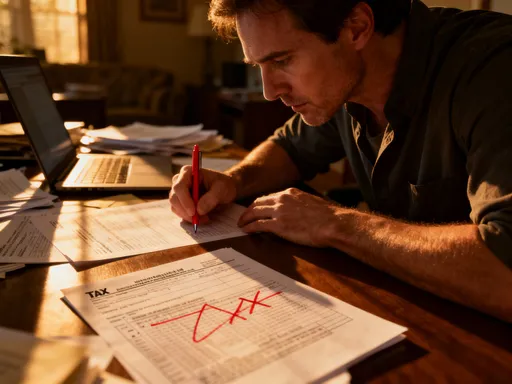
Then came the notice. Not an audit, but a request for clarification. The IRS wanted documentation for my home office square footage and a breakdown of how I calculated mileage. I scrambled—receipts were missing, my calendar notes were incomplete, and I couldn’t prove that the room I used was exclusively for business. It took three weeks, multiple phone calls, and a mountain of stress to sort it out. In the end, I didn’t owe penalties, but I had to reduce my home office claim. The financial hit was modest, but the emotional toll wasn’t. I lost confidence. I started questioning every financial decision I made. Was I doing things right? Was I one misstep away from real trouble?
That moment became my turning point. I realized that tax planning wasn’t just about maximizing deductions or hitting “file” by April 15. It was about building a system that prevents problems before they happen. I had been reactive—fixing things at tax time—when I needed to be proactive, thinking ahead and catching red flags months in advance. The mistake wasn’t in claiming the deduction; it was in not verifying its validity earlier. I needed a way to spot risks long before filing season, not during a panic. That’s when I began developing a method that focused not on saving every dollar, but on protecting the ones I already had.
What Risk Identification Really Means in Tax Planning
When most people think about taxes, they focus on two things: how much they owe and how much they can save. But risk identification shifts the focus from savings to safety. It means asking not just “Can I claim this?” but “Will this hold up if questioned?” It’s the difference between hoping for the best and preparing for reality. Risk identification isn’t about fear-mongering or assuming the IRS is out to get you. It’s about recognizing that the tax system is complex, and small inconsistencies—often invisible in the moment—can become big problems later.
At its core, tax risk identification is the practice of spotting potential issues before they trigger scrutiny, penalties, or stress. This includes things like unclear documentation, misclassified income, incorrect filing status, or deductions that push income near phase-out thresholds. For example, claiming a charitable contribution without a written acknowledgment from the organization might seem minor, but it can invalidate the entire deduction if challenged. Similarly, failing to report income from a side gig because it wasn’t on a 1099 form doesn’t make it tax-free—it just increases the risk of a mismatch with third-party data the IRS already has.
What makes these risks so dangerous is their invisibility. They don’t come with warning labels. A freelancer might assume that all business expenses are deductible, not realizing that meals with clients are only 50% deductible under current rules. A homeowner might claim energy-efficient home improvements without knowing the credit has specific eligibility requirements and dollar limits. These aren’t intentional mistakes—they’re gaps in awareness. And because the consequences don’t appear until months or years later, people often don’t connect the cause and effect. By the time a notice arrives, the records are gone, memories have faded, and the damage is done.
The real power of risk identification lies in changing your mindset. Instead of treating tax season as an annual event, it encourages you to think of tax planning as an ongoing process. It means building habits that support accuracy, consistency, and compliance throughout the year. This shift—from reactive to proactive—is what transforms tax planning from a source of stress into a tool for financial control. You’re no longer guessing or hoping. You’re verifying, confirming, and protecting your position before problems arise.
Common Blind Spots That Turn Into Real Trouble
Some of the most common tax risks aren’t exotic or complex—they’re everyday situations that most taxpayers encounter without realizing the potential pitfalls. One of the biggest blind spots is passive income. Think rental properties, dividends, or income from a side investment. Many people assume that if the income is small or not reported on a 1099, it’s not important. But the IRS receives copies of those forms too. If your return shows $0 in rental income but a property management company reports $3,000 to the IRS, that mismatch can trigger an automated review. Even if you correct it later, the process is time-consuming and stressful.
Another frequent issue is the home office deduction. While it’s a legitimate way to reduce taxable income, it’s also one of the most scrutinized areas. The rules require that the space be used regularly and exclusively for business. That means no folding tables in the guest room that double as a craft station. The IRS looks for consistency—if you claim a home office one year and not the next, without a clear reason, it raises questions. Additionally, miscalculating square footage or failing to keep a floor plan sketch can weaken your claim. Many people don’t realize they need to document the size and use of the space, not just declare it.
Side hustles are another growing risk area. With the rise of gig economy platforms, more people earn money from tutoring, selling handmade goods, or driving rideshares. But not all income is automatically reported, and not all expenses are clearly deductible. For instance, using your personal car for deliveries might seem like a simple mileage claim, but without a log that tracks business vs. personal use, the IRS can disallow it entirely. Similarly, buying supplies online without saving receipts makes it hard to prove business use. These oversights don’t mean you’re trying to cheat—they just mean you’re unprepared.
Timing is also a hidden trap. Some deductions and credits are tied to income thresholds that phase out at certain levels. If you make a large Roth IRA conversion or receive a bonus late in the year, you might unintentionally push your income into a range where you lose eligibility for education credits, the child tax credit, or even the ability to deduct traditional IRA contributions. These phase-outs aren’t always obvious, and tax software might not flag them until you’re deep into the filing process. By then, it’s too late to adjust. Proactive planning means understanding these thresholds and monitoring your income throughout the year to avoid unintended consequences.
My Step-by-Step Method for Early Risk Detection
After my wake-up call, I knew I needed a system—not just better intentions. I developed a four-step process that takes less than an hour each quarter but has prevented multiple potential issues. The goal isn’t perfection; it’s awareness. I call it the “Tax Checkpoint Review,” and it’s built around asking the right questions at the right time.
The first step is income mapping. Every three months, I gather all my income statements—bank deposits, 1099s, PayPal summaries, and cash records. I list each source and verify that it matches what I expect. If I see a payment from a tutoring client that wasn’t documented, I note it and follow up. This isn’t about catching fraud; it’s about ensuring completeness. Missing income isn’t always intentional—sometimes it’s just poor tracking. By reviewing quarterly, I catch discrepancies while the details are still fresh.
The second step is deduction validation. I keep a running list of potential deductions: home office, mileage, supplies, and professional development. Every quarter, I review each item and ask: Do I have proof? Is it still valid? For mileage, I check my log to ensure entries are dated and purpose-specific. For home office, I confirm the space is still used exclusively for business. If I’ve started using the room for storage or guests, I know the deduction may no longer apply. I also verify that receipts are saved and organized. This step prevents me from claiming something in April that I can’t support in June if questioned.
The third step is threshold monitoring. I keep a simple spreadsheet that tracks my year-to-date income and compares it to key tax thresholds. For example, I know that the child tax credit begins to phase out at $200,000 for single filers and $400,000 for married couples. If a bonus or investment gain pushes me close to that line, I can adjust—maybe defer a contract or make a deductible contribution to stay under. Similarly, I track eligibility for retirement account contributions, which also have income limits. This isn’t about tax avoidance; it’s about informed decision-making.
The final step is record reconciliation. I compare my personal records with what third parties report. If a brokerage sends me a 1099-DIV, I verify the numbers match my own tracking. If a rental payment was recorded in my ledger but not on the management company’s statement, I investigate. This step catches errors early—sometimes on their end, sometimes on mine. It also builds a paper trail that’s organized and complete, reducing the fear of an audit. Over time, this quarterly review has become routine. It’s not a burden; it’s a safeguard. And the peace of mind it brings is worth every minute.
How Proactive Planning Beats Last-Minute Panic
There’s a stark difference between fixing problems and preventing them. I used to wait until March to gather receipts, reconstruct mileage logs, and wonder what I could deduct. That approach was stressful, inefficient, and risky. I was making decisions under pressure, often guessing or overclaiming out of fear of “leaving money on the table.” Now, I take a different path. By spreading the work throughout the year, I file with confidence, not anxiety.
Consider two scenarios. In the first, a taxpayer waits until April to compile records. They realize they earned $2,500 from online sales but never tracked expenses. They estimate mileage, guess at supply costs, and hope it’s enough. When the IRS later requests documentation, they can’t provide it and must pay back the deduction plus interest. In the second scenario, the same taxpayer reviews their records quarterly. They save every receipt, log each business trip, and verify income as it comes in. When filing time arrives, everything is ready. No scrambling, no guessing, no risk.
The benefits go beyond compliance. Proactive planning leads to better decision-making. When I know my income is approaching a phase-out threshold, I can choose to delay a project or increase retirement contributions. When I see a deduction might be questionable, I can consult a tax professional early, not in a rush. This approach also improves accuracy. Studies show that taxpayers who keep organized records are less likely to make errors and more likely to claim eligible credits they might otherwise miss, like the saver’s credit or energy efficiency incentives.
But the greatest advantage is psychological. There’s a deep sense of control that comes from knowing your records are solid. You’re not waiting for a letter. You’re not second-guessing your choices. You’re not losing sleep over what-ifs. That peace of mind is a form of financial wellness. It allows you to focus on bigger goals—saving for a home, funding education, planning for retirement—without the constant background noise of tax anxiety. Proactive planning doesn’t just protect your money; it protects your time, your energy, and your confidence.
Tools and Habits That Keep Me on Track
I don’t rely on memory or last-minute effort. Instead, I use simple, sustainable systems that integrate tax planning into my regular routine. The first tool is digital organization. I have a dedicated folder on my cloud storage labeled “Tax Records – [Year].” Inside, I create subfolders for income, deductions, and correspondence. Every time I receive a 1099, save a receipt, or have a tax-related conversation, I upload it immediately. This creates a centralized, searchable archive that’s accessible from any device. No more digging through shoeboxes or email threads.
The second tool is calendar automation. I set quarterly reminders labeled “Tax Checkpoint Review” that prompt me to run through my four-step process. These aren’t optional tasks; they’re appointments with myself. I also set monthly reminders to log mileage and save receipts, so I’m not playing catch-up later. These small habits take minutes but prevent hours of stress down the line.
I also use a basic spreadsheet to track key numbers: year-to-date income, estimated deductions, and major life changes that could affect taxes, like a new job, home purchase, or retirement account withdrawal. This gives me a real-time snapshot of my tax picture. I don’t need complex software—just clarity. Additionally, I schedule an annual check-in with a tax professional, not to file, but to review my plan. This 30-minute conversation helps me catch potential issues and stay updated on changes in the tax code.
These tools aren’t flashy, but they’re effective. They turn risk identification from an abstract idea into a practical habit. Over time, they’ve become second nature. I no longer dread tax season. I don’t feel overwhelmed. I feel prepared. And that shift—from fear to readiness—is what makes all the difference.
Why This Approach Protects More Than Just Your Wallet
What started as a fix for a financial mistake became something much deeper. This method didn’t just help me avoid tax traps—it changed how I relate to money. Before, I saw taxes as an unavoidable burden, something to endure once a year. Now, I see them as part of a larger financial picture, one that reflects my choices, values, and priorities. Knowing that my records are accurate and my claims are valid gives me a sense of integrity. I’m not cutting corners. I’m not gambling on getting away with something. I’m building a foundation of honesty and responsibility.
That foundation extends beyond taxes. It influences how I budget, save, and plan for the future. When I know I’m not sitting on hidden risks, I can make bolder moves—invest in education, start a new project, or take a career break—without the fear that a tax issue could derail everything. I sleep better. I worry less. I feel more in control of my life. This isn’t just about compliance; it’s about confidence.
For many women, especially those managing households or running small businesses, financial responsibility often comes with quiet pressure. We’re expected to do it all—care for families, earn income, manage money—without making mistakes. But mistakes are inevitable if the system isn’t designed to support us. By building a proactive, structured approach to tax planning, I’ve created a system that supports me. It’s not about being perfect. It’s about being prepared. It’s about knowing that even if something goes wrong, I have the records, the habits, and the clarity to handle it.
In the end, spotting tax traps isn’t just about saving money. It’s about gaining freedom—the freedom to plan, to grow, and to live without fear. It’s about turning a source of stress into a source of strength. That’s the real benefit of proactive tax planning. It’s not just financial protection. It’s financial clarity, and that changes everything.